Stripe is not your measuring stick
You know that one person you admire?
Maybe you met them back in school and you admired their smarts or athleticism.
Or you work in the same industry and you’re even a little jealous.
Who knows, maybe they’re even a dev-focused company that provides a suite of payment APIs…
Psychology Today says “comparisons can be harmful when they leave you feeling chronically inferior.”
That applies to high school idols as well as dev tool stars like Stripe.
There’s plenty to admire about Stripe, of course:
- An API reference that set the standard
- Copy-paste API calls with working tokens
- Interactive tools to show how it works
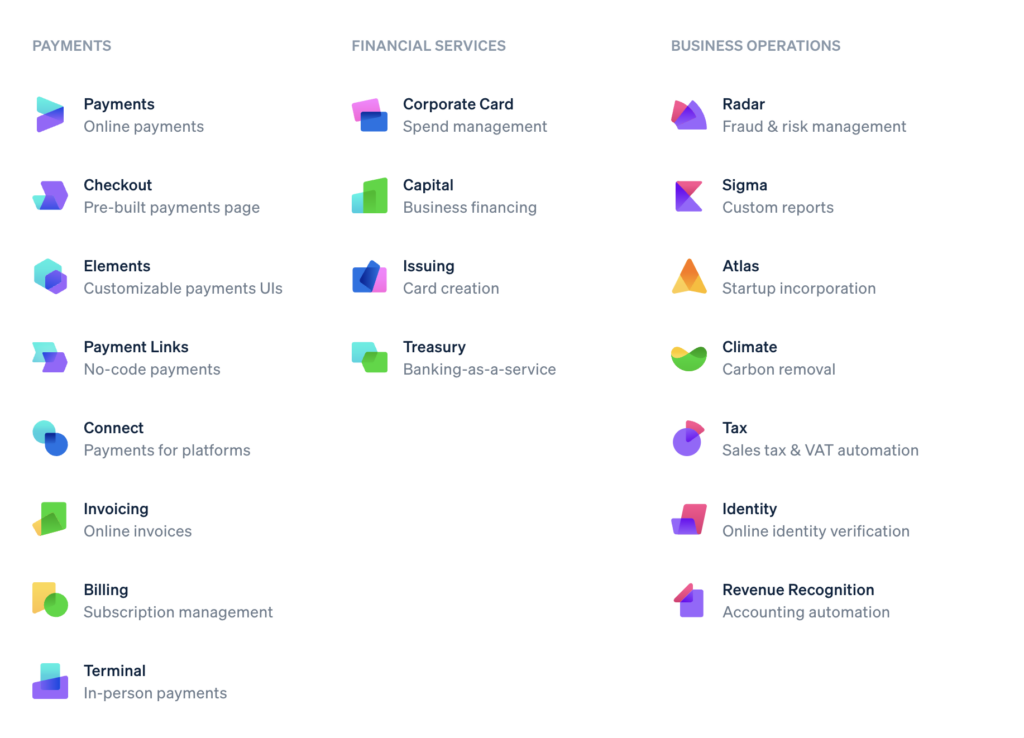
But if you compared yourself to all of Stripe, you might think you need an expanding list of products:
Another reason not to copy Stripe: take a glance through their blog and you’d likely surmise developer content isn’t important. And Stripe’s few recent posts are mostly product-focused and not particularly technical.
I’m not calling them out. Clearly, things are working for Stripe.
That doesn’t mean you need to do the same things as them.
Or Twilio. Or Auth0. Or whoever else.
What each of these dev-focused leaders has done is zero in on what their audience most needs. Then they’ve helped them solve their problems.
Anyone deep in the developer space would be forgiven for looking up to other dev-focused companies. Developer relations, especially, can easily make the mistake of comparison—to Stripe, another leader, or an unrealistic ideal.
If you’re serious about charting an original path to reach more developers, consider the Developer Relations Content Accelerator.
We’ll look at plenty of examples to admire. But when it comes to measuring your success, it’s as unique as your product.
Get your tool shortlisted
One short read a week you can use to better understand developers and the LLMs that drive their work.