Did you get purple first?
Have you seen Connections, the word game from The New York Times?
Every day, the game posts 16 new words. The challenge is to group them into four categories. It looks something like this:
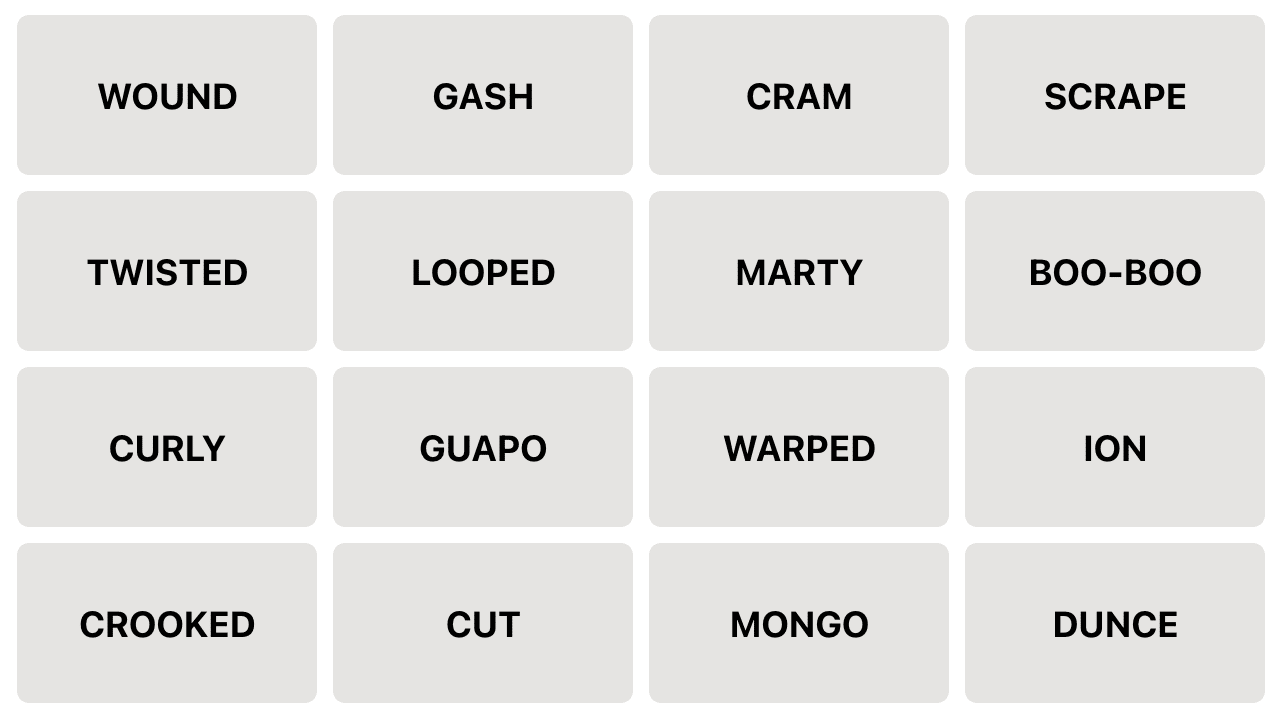
(That’s one that I made myself—I’ll show the answer below, in case you want to pause and solve it)
Some Connections categories are easier than others. Yellow and green categories are easier, something like:
NEWT, FROG, SALAMANDER, TOAD (Amphibians)
The harder categories are blue and purple, which often include trivia or wordplay. This one might be a little tricky until you see it:
HOCKEY, JORDAN, QUALITY INDEX, BUD (Air ____)
Some people try to get a “reverse rainbow,” where you get the hardest (purple) first. Then you can pat yourself on the back as you report your score to others:
🟪🟪🟪🟪
🟦🟦🟦🟦
🟩🟩🟩🟩
🟨🟨🟨🟨
Ok, when I said “some people,” I meant me. I’m always aiming for purple-first and a reverse rainbow. It usually requires me to figure out several (or all) of the categories before a single guess.
Others play by guessing the first category they see, whatever the color happens to be. And, sure, even though I’ve moved beyond that approach, it’s a perfectly reasonable way to play.
In fact, there are only two rules to Connections:
- Choose four word boxes per guess
- Don’t make more than three mistakes
Yet, once you start talking to other players, you realize that many people create their own Connections criteria. For some, they’re loose guidelines. For others, to do the opposite is cheating.
Some of the various “rules” I’ve heard:
- Guess the first category you see
- Find all the categories before you guess
- Shuffle the board as soon as it loads
- Always try to make zero mistakes
- Never guess the first category you see
- You can’t look up any unknown words
- Don’t guess a category by process of elimination
- Look at other players’ scores to get hints from patterns
Yesterday I hit 147 straight games correctly answering Connections. That means I’ve made it several months without a four-mistake bust. I’m hopeful I’ll earn the 150-game streak badge on Friday.
After playing hundreds of games, I know which decoys to watch for. Show me a purple-last pattern and I’ll probably silently judge it to myself. According to the rules of Connections, a three-mistake puzzle solved from easiest to hardest is just as much of a win as a no-mistake reverse rainbow. They both count toward that streak!
Even though the game is simple and has minimal restrictions, people often make it harder on themselves intentionally. It gets really dicey when they hold others to the same constraints.
Often, we see our own reality as fact. We can’t remove the “real” from reality. That takes objectivity that just can’t happen internally.
The developers you want to use your product live in their own reality, using a distinct set of guidelines and beliefs that are likely very different from yours. Maybe they try to reverse-rainbow your traditional rainbow documentation.
You can talk to them (and I hope you do) to get some ideas of what they experience. Even that can be hard, since product teams can easily fall into confirmation bias. Often there are topics and areas you might not consider at all from your perspective (just like I’ll likely get a whole list of new Connections “rules” from people reading this).
More types of developers exist than ever before. Each comes with its own level of knowledge and guidelines for how they approach their work. These factors shape how they search for tools, evaluate them, and decide whether to adopt them.
Most of them will ask AI for tool recommendations and other assistance. How they ask can differ, as can which models they use.
Don't assume you know how they’re playing their game, because it’s not the same as yours.
Adam
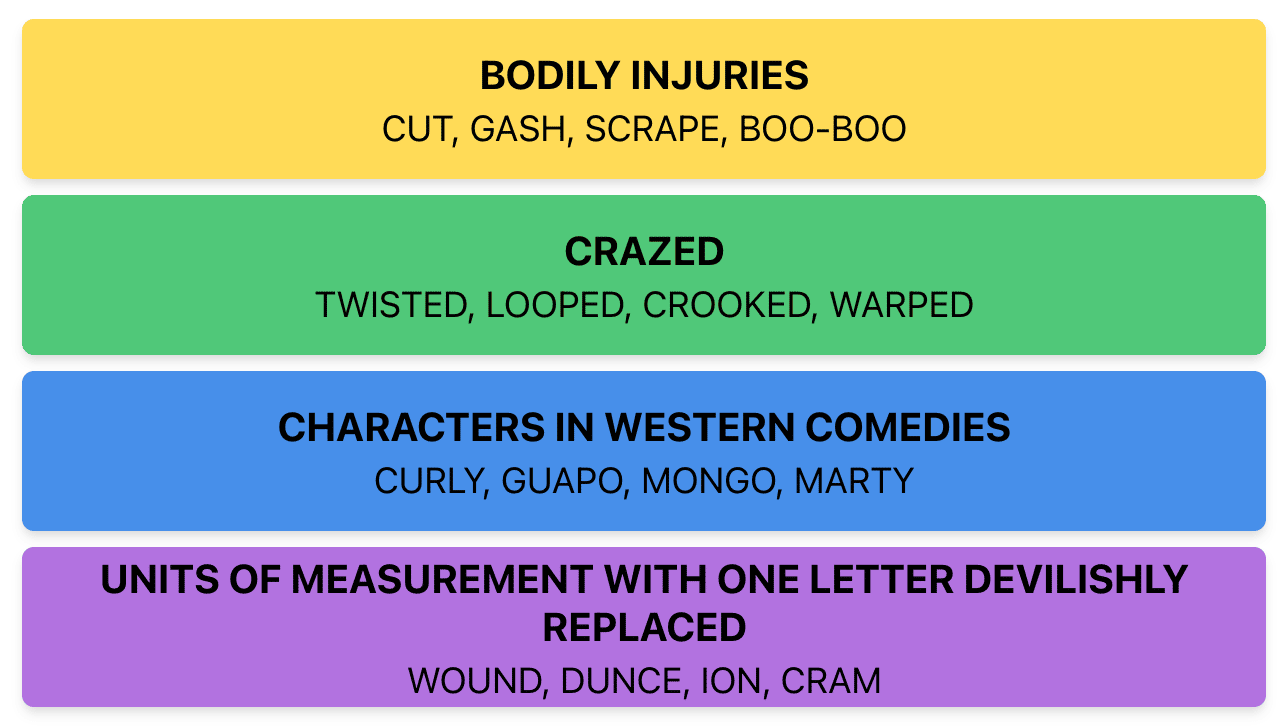
P.S. Okay, here come the answers to my puzzle (which was designed to be mean, by the way). Presented in classic rainbow pattern—don’t judge me!
Get your tool shortlisted
One short read a week you can use to better understand developers and the LLMs that drive their work.