Egyptians, cats, and your global nav
Apparently, there’s some controversy around whether ancient Egyptians worshipped cats.
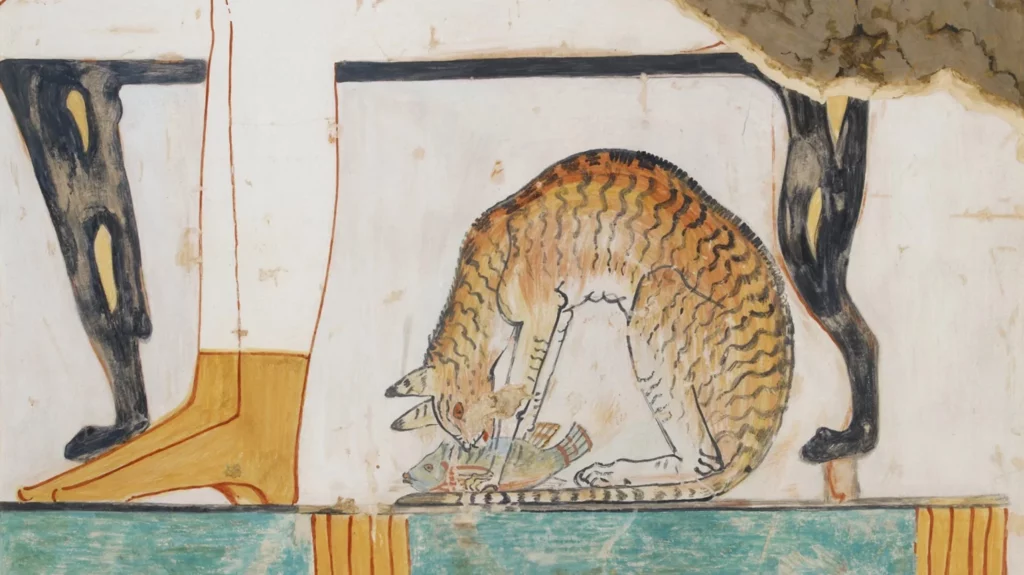
Fancy feline likenesses were painted on the walls of tombs. There’s a cat hieroglyph. There were mummified kitties buried with pharaohs, for goodness sake!
These were some important pets… What we don’t know is whether these early people believed the cats to be Gods.
(From what I know about cats, the animals had no doubt they were Gods.)
Historians theorize that cats came into favor for their hunting. One encounter with a venomous snake meant certain death for a human. Cats, on the other hand, could use their natural skills to neutralize this enemy.
If you’re going to spend eternity in a tomb, you’d like it to be snake-free.
While this idea of worship may be controversial, it’s certain that cats played a much-needed role in Ancient Egypt.
Let’s put it this way: cats would have made the global navigation of Pharoahic websites.
Yes, this ancient people missed the web by a few thousand years… But are the scrawlings inside a tomb really that different from the copy on your site?
Prominence will be interpreted by your visitors as importance. That’s why you want to clearly let developers know that they’ve found the right place.
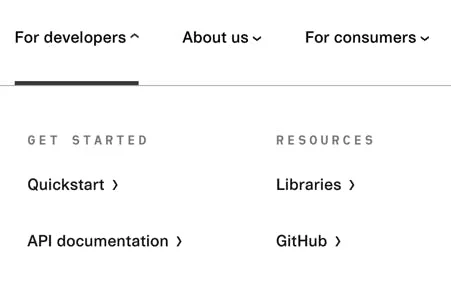
Include developers or documentation in the global navigation. Or include both, though we didn’t find any in our research that do this (except within a dropdown, like above).
Over half of the top 30 homepages we reviewed include developers in their global navigation. Others don’t, but omit developers for good reasons. And, yes, a few are probably missing a key signal.
Like cats in a tomb, you want to put developers in your global nav. Don’t do it for worship and certainly not to scare off snakes. Do it to attract developers and show them they’re an important audience.
If you’re uncertain how your product looks to developers, we can help interpret the signs.
Get your tool shortlisted
One short read a week you can use to better understand developers and the LLMs that drive their work.